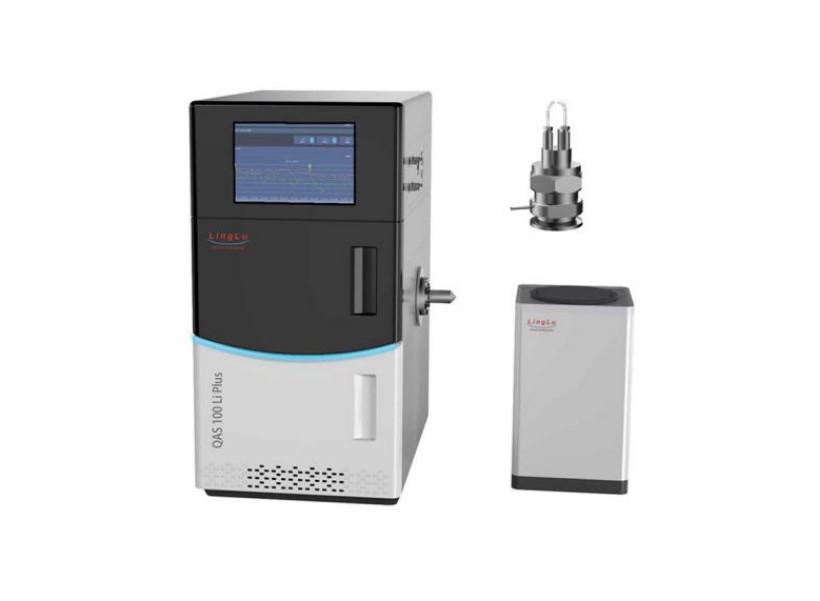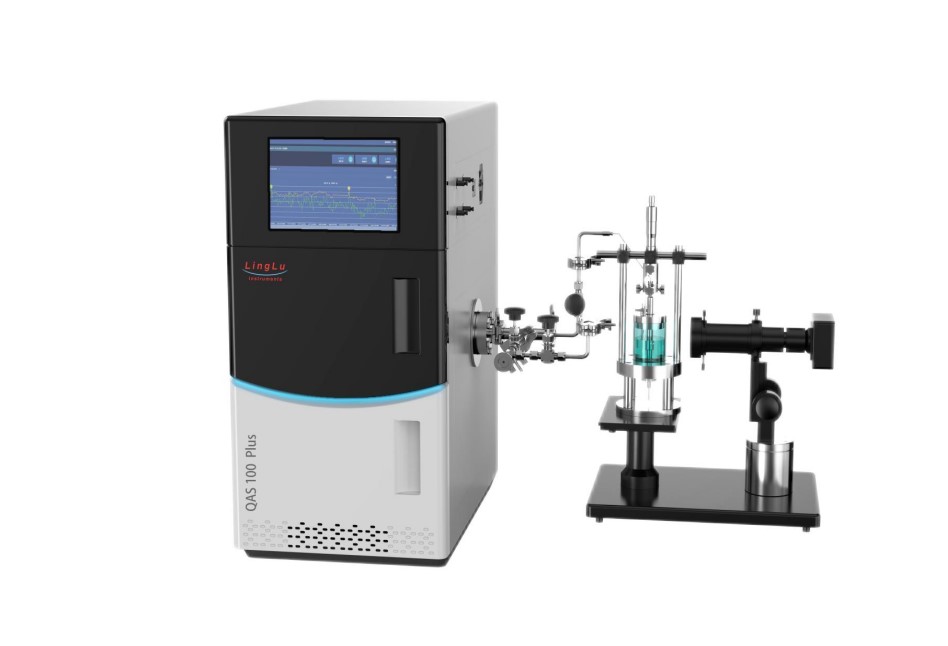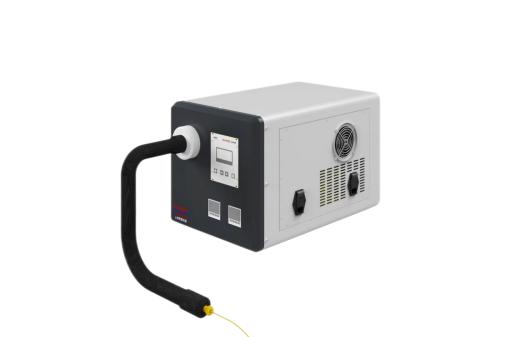


DEMS for In-situ Analysis of Gas Evolution during Battery Charge and Discharge
Mass spectrometry is a powerful instrument for identifying substance compositions and can be used for gas analysis. It is capable of analyzing species ranging from hydrogen molecules with the smallest mass number to large organic vapours with molecular weights of several hundred, making it a versatile gas analyser. It features low detection limits, high sensitivity, a wide linear range and low gas consumption. It also supports isotopic labelling and is widely applied to gas analysis of various batteries.
In-situ electrochemical mass spectrometry, also known as operando electrochemical mass spectrometry, differential electrochemical mass spectrometry (DEMS), OLEMS, etc., enables online analysis of gas evolution during charge and discharge of various energy storage devices including lithium-ion batteries. For battery systems involving gas consumption, such as air batteries, it allows quantitative analysis of gas consumption. It can real-time monitor gas generation or consumption at different stages of battery operation, namely acquiring the profile of gas generation or consumption as a function of potential during battery cycling. It serves as one of the important analytical tools for investigating battery reaction mechanisms, rapid screening of electrode materials and evaluating electrolyte decomposition.
Specific Applications:
Quantitative detection of O₂ and CO₂ evolution during the first charge of Li-rich cathode materials
Quantitative detection of O₂ and CO₂ evolution during the first charge of high-voltage LiCoO₂
Quantitative detection of O₂ and CO₂ evolution during the first charge of ternary cathode materials
Quantitative detection of O₂ and CO₂ evolution during the first charge of high-nickel cathode materials
Quantitative detection of O₂ and CO₂ evolution during the first charge of cathode materials for sodium-ion batteries
Quantitative detection of O₂ and CO₂ evolution during the first charge of anode materials
Study on gas evolution from battery electrolyte decomposition
Detection of O₂ and H₂ evolution during charge and discharge of aqueous zinc-ion batteries
Quantitative detection of O₂ consumption during discharge and O₂ evolution during charge for Li-O₂ batteries
Quantitative detection of CO₂ consumption during discharge and CO₂ evolution during charge for Li-CO₂ batteries
Application Cases:
1.Quantitative detection of O₂ evolution during the first charge of Li-rich cathode materials

Nat. Comm. 2022, 13,1123
2.Quantitative detection of O₂ evolution during the first charge of high-voltage LiCoO₂

Angew. Chem. 2021, 133, 27308 – 27318
3.Quantitative detection of O₂ and CO₂ evolution during the first charge of high-nickel cathode materials

Small 2021, 2104282
4.Detection of O₂ evolution during the first charge of cathode materials for sodium-ion batteries

Nat. Comm. (2021) 12:5267
5.Detection of gas evolution during the discharge of anode materials

Energy Environ. Sci., 2019, 12, 2991--3000
6.Detection of gas evolution from electrolyte decomposition in lithium-ion batteries

Journal of The Electrochemical Society, 162 (10) A1984-A1989 (2015)
7.Zinc-ion batteries

Joule 2022, 6, 399-417
8.O₂ detection during charge and discharge of Li-O₂ batteries

ACS Appl. Mater. Interfaces, 2021,13,4062-4071
9.CO₂ detection during charge and discharge of Li-CO₂ batteries

Small 2021, 17, 2100642