
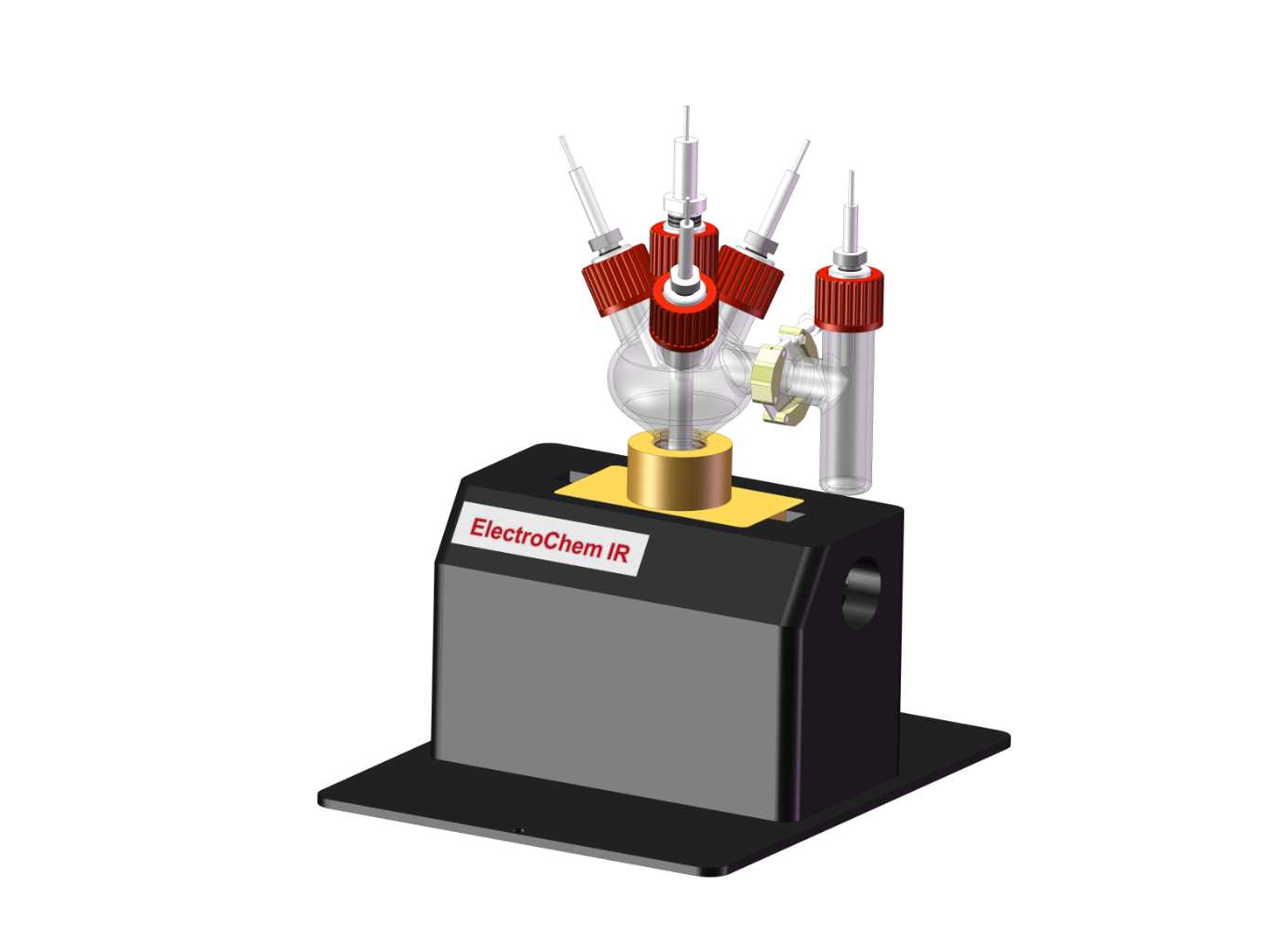
In situ FTIR for electrochemistry
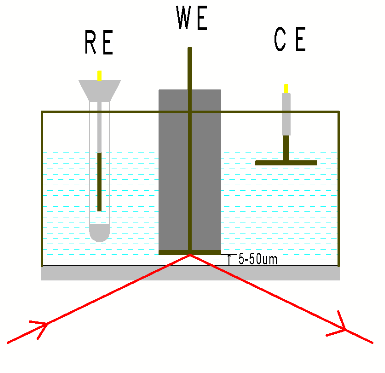
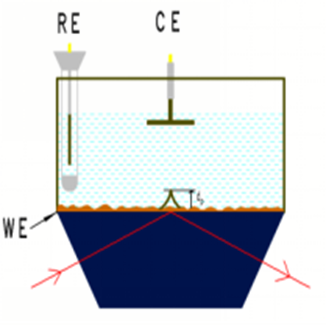
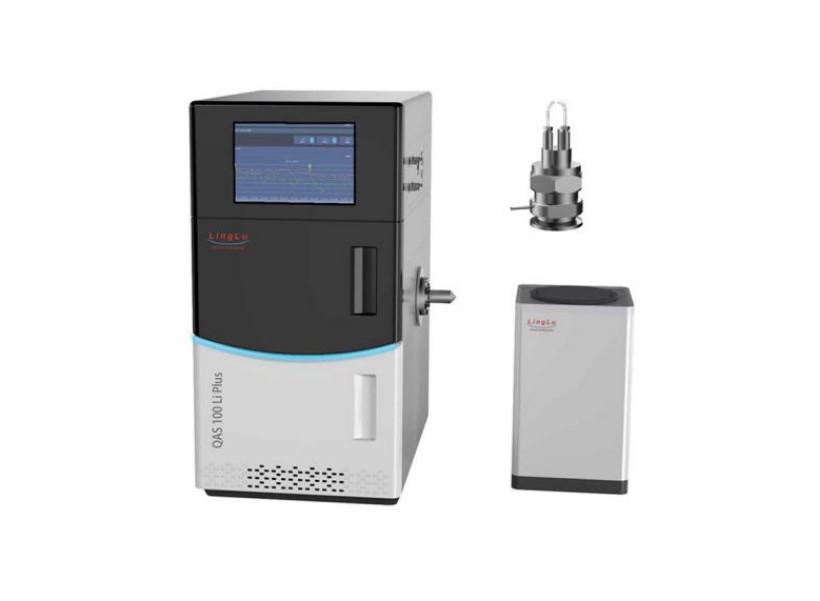
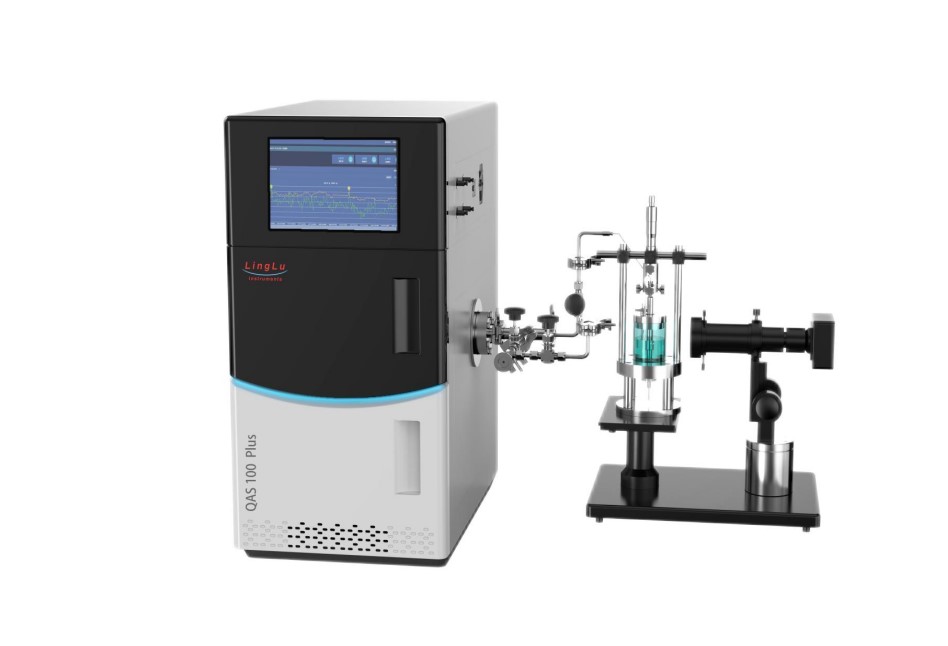
Fig. 1: Schematic Diagram
Electrochemical in-situ FTIR spectroscopic analysis is an important branch of infrared spectroscopy. It enables qualitative analysis of the time- (potential-) dependent evolution of products and intermediates on electrode surfaces during electrocatalytic reactions (e.g., CO₂ electroreduction) and the charge/discharge processes of various batteries (e.g., lithium-ion batteries, lithium‑sulfur batteries). It serves as one of the key approaches for investigating electrochemical reaction mechanisms and electrochemical reaction kinetics.
I. Basic Principle
Internal Reflection Mode:
(1) A nanoscale gold film is deposited on single-crystal silicon (Si) via electroless plating or vacuum deposition. The nano-metallic film exhibits surface enhancement effects.
(2) The nano gold film serves as a conductive substrate. Electrocatalysts can be drop-casted or electrodeposited onto this conductive substrate to form the working electrode.
(3) Surface-enhanced infrared spectroscopy enables acquisition of information about adsorbed products and intermediates of electrocatalysts.
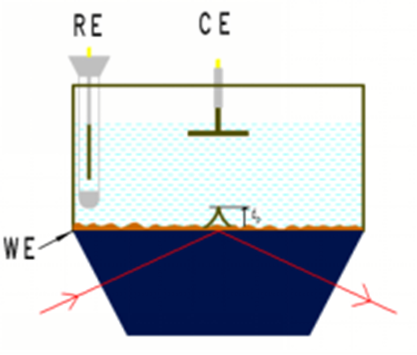
Fig. 2: Basic Principle of Internal Reflection Mode
External Reflection Mode:
(1) Electrocatalysts are electrodeposited or drop-casted on the substrate electrode (e.g., GCE) to form the working electrode.
(2) The gap between the working electrode and the crystal is adjustable.
(3) Optional crystal materials: Ge, ZnSe, CaF₂, Si, etc.
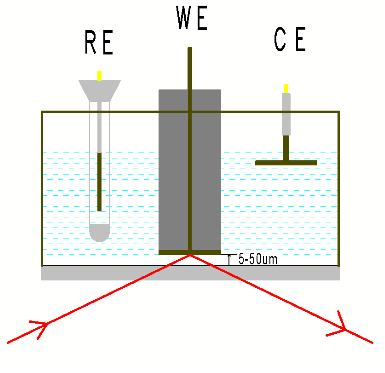
Fig. 3: Schematic of External Reflection Mode
II. Accessory Components:
(1) FTIR spectrometer adapter base plate, compatible with mainstream FTIR spectrometers.
(2) Plane mirror and curved mirror.
(3) Incident angle adjustment system.
(4) ATR crystal (Attenuated Total Reflection crystal).
(5) Electrochemical glass cell ( single cell or H-type cell) and PEEK external-reflection cell.
(6) Electrodes (glassy carbon working electrode, counter electrode, reference electrode).
(7) Gap adjustment system.
III. Key Features:
(1) Optical bench with variable incident angle, continuously adjustable from 30° to 80°, to ensure maximum optical throughput for different electrocatalysts.
(2) The ATR crystal is coated with an anti-reflection film, increasing optical throughput by more than 10%.
(3) The electrochemical cell features reliable sealing and allows introduction of reaction gases.
(4) The crystal is easy to disassemble for polishing and cleaning.
(5) Optional crystal materials, such as Si, CaF₂, ZnSe, etc.
(6) Easy switching between single electrochemical cell and H-type cell.
(7) On-site technical service is available.
(8) Custom reaction cells and feasibility solutions can be provided according to customer requirements.
IV. ATR Crystal characteristics for FTIR sampling
Crystal | pH range | Spectrum range(cm-1) |
Diamond | 1-14 | 250/525-4000 |
Ge | 1-14 | 575-5000 |
Silicon | 1-12 | 1200-8900 |
ZnSe | 5-9 | 525-15000 |
CaF2 | 5-8 | 1100-7700 |
Case Studies
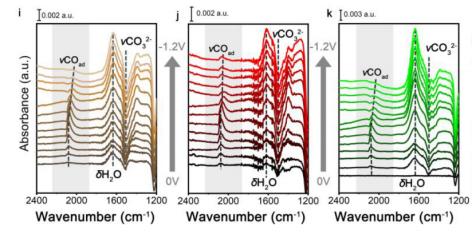
CO2RR J. Am. Chem. Soc.2022, 144, 259−269
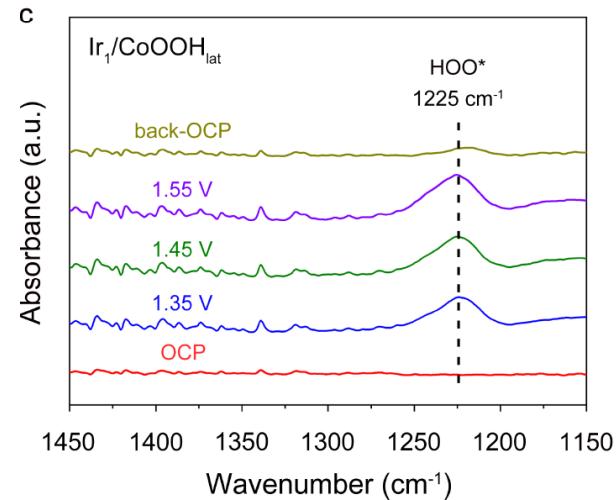
HER J. Am. Chem. Soc. 2022, 144, 21, 9271–9279
List of Selected Customer Publications
Jianping Xiao*, Bin Zhang*, et al. Unveiling hydrocerussite as an electrochemically stable active phase for efficient carbon dioxide electroreduction to formate. Nat. Commun. 2020, 11, 3415
Lei Yan, Yonggang Wang*, et al. Chemically Self-Charging Aqueous Zinc-Organic Battery. J. Am. Chem. Soc. 2021, 143, 15369-15377
Bingliang Wang, Yongyao Xia*, et al. In situ structural evolution of the multi-site alloy electrocatalyst to manipulate the intermediate for enhanced water oxidation reaction. Energy Environ. Sci. 2020, 13, 2200-2208
Yang Peng*, et al. Breaking Linear Scaling Relationship by Compositional and Structural Crafting of Ternary Cu-Au/Ag Nanoframes for Electrocatalytic Ethylene Production. Angew. Chem. Int. Ed. 2021, 60, 2508-2518
Zhuo Yu, Yonggang Wang*, et al. Boosting Polysulfide Redox Kinetics by Graphene-Supported Ni Nanoparticles with Carbon Coating. Adv. Energy Mater. 2020, 10, 2000907
Xinwei Ding, Zhi Yang*, et al. Biomimetic Molecule Catalysts to Promote the Conversion of Polysulfides for Advanced Lithium–Sulfur Batteries Adv. Funct. Mater. 2020, 30, 2003354
Hong Guo*, Xueliang Sun*, et al. Dual Active Site of the Azo and Carbonyl-Modified Covalent Organic Framework for High-Performance Li Storage. ACS Energy Lett. 2020, 5, 1022-1031
Bin Zhang* et al. Superficial Hydroxyl and Amino Groups Synergistically Active Polymeric Carbon Nitride for CO2 Electroreduction. ACS Catal. 2019, 9, 10983-10989
Suya Zhou, Zhi Yang*, et al. Dual-Regulation Strategy to Improve Anchoring and Conversion of Polysulfides in Lithium–Sulfur Batteries ACS Nano. 2020, 14, 7538–7551
Yongyao Xia*, et al. Low-Temperature Charge/Discharge of Rechargeable Battery Realized by Intercalation Pseudocapacitive Behavior. Adv. Sci. 2020, 7, 2000196
Lei Wang*, Yonggang Wang, et al. Pencil-drawing on nitrogen and sulfur co-doped carbon paper: An effective and stable host to pre-store Li for high-performance lithium–air batteries. Energy Storage Materials. 2020, 26, 593-603
Bin Zhang, et al. Unveiling in situ evolved In/In2O3− x heterostructure as the active phase of In2O3 toward efficient electroreduction of CO2 to formate. Science Bulletin. 2020, 65, 1547-1554
Huani Li, Shubiao Xia*, Hong Guo*, et al. Red Phosphorus Confined in Hierarchical Hollow Surface-Modified Co9S8 for Enhanced Sodium Storage. Sustainable Energy Fuels. 2020, 4, 2208-2219
Guanglei Cui*, Liquan Chen, et al. Non-flammable nitrile deep eutectic electrolyte enables high voltage lithium metal batteries. Chem. Mater. 2020, 32, 3405-3413
Guanglei Cui*, et al. Investigation on the Cathodic Interfacial Stability of Nitrile Electrolyte and its performance with High Voltage LiCoO2 Chem. Commun. 2020, 56, 4998-5001
Zhongbin Zhuang*, et al. A highly-active, stable and low-cost platinum-free anode catalyst based on RuNi for hydroxide exchange membrane fuel cells. Nat. Commun. 2020, 11, 5651
Tiancun Liu, Yong Wang*, et al. Organic supramolecular protective layer with rearranged and defensive Li deposition for stable and dendrite-free lithium metal anode. Energy Storage Materials. 2020, 32, 261–271
X. Yin, Y. Wang*, et al. Designing cobalt-based coordination polymers for high-performance sodium and lithium storage: from controllable synthesis to mechanism detection. Materials Today Energy. 2020, 17, 100478
Song Chen, Jintao Zhang*, et al. Regulation of Lamellar Structure of Vanadium Oxide via Polyaniline Intercalation for High-Performance Aqueous Zinc-Ion Battery. Adv. Funct. Mater. 2020, 30, 2003890
Yanrong Xue, Zhongbin Zhuang*, et al. Sulfate-Functionalized RuFeOx as Highly Efficient Oxygen Evolution Reaction Electrocatalyst in Acid. Adv. Funct. Mater. 2021, 31, 2101405
Hong Guo*, et al. Cooperative catalytic interface accelerates redox kinetics of sulfur species for high-performance Li-S batteries. Energy Storage Materials. 2021, 40, 139-149
Bin Zhang*, et al. Promoting nitric oxide electroreduction to ammonia over electron-rich Cu modulated by Ru doping. SCIENCE CHINA Chemistry. 2021, 64, 1493–1497
Yang Peng*, et al. Geometric Modulation of Local CO Flux in Ag@Cu2O Nanoreactors for Steering the CO2RR pathway toward High-Efficacy Methane Production. Adv. Mater. 2021, 33, 2101741
Yonggang Wang*, et al. Molecular Tailoring of n/p-type Phenothiazine Organic Scaffold for Zinc Batteries. Angew. Chem. Int. Ed. 2021, 60, 20826-20832
Hongliang Jiang*, Chunzhong Li*, et al. Dynamically Formed Surfactant Assembly at the Electrified Electrode–Electrolyte Interface Boosting CO2 Electroreduction. J. Am. Chem. Soc. 2022, 144, 6613–6622
Yang Peng*, et al. Au-activated N motifs in non-coherent cupric porphyrin metal organic frameworks for promoting and stabilizing ethylene production. Nat. Commun. 2022, 13, 63
Jie Zeng*, et al. Copper-catalysed exclusive CO2 to pure formic acid conversion via single-atom alloying. Nature Nanotechnology. 2021, 16, 1386-1393
Min-Rui Gao*, et al. Identification of Cu(100)/Cu(111) Interfaces as Superior Active Sites for CO Dimerization During CO2 Electroreduction. J. Am. Chem. Soc. 2022, 144, 1, 259-269
Chen Feng, Shiming Zhou*, Jie Zeng*, et al. Tuning the Electronic and Steric Interaction at the Atomic Interface for Enhanced Oxygen Evolution. J. Am. Chem. Soc. 2022, 144,21,9271-9279
Rui Lin, Jianhui Wang, et al. Asymmetric donor-acceptor moleculeregulated core-shell-solvation electrolyte for high-voltage aqueous batteries. Joule 2022, 6, 399–417
Xiaogang Zhang*, et al. Successive Cationic and Anionic (De)-Intercalation/Incorporation into an Ion-Doped Radical Conducting Polymer. Batteries & Supercaps 2019, 2, 979-984
Zhongju Wang, Yongzhu Fu*, et al. Biredox‐Ionic Anthraquinone‐Coupled Ethylviologen Composite Enables Reversible Multielectron Redox Chemistry for Li‐Organic Batteries. Adv. Sci. 2022, 9, 2103632
Jintao Zhang*, et al. Defect evolution of hierarchical SnO2 aggregatesfor boosting CO2 electrocatalytic reduction. J. Mater. Chem. A 2021, 9, 14741-14751
Fei Ai, Yijun Lu*, et al. Heteropoly acid negolytes for high-power-density aqueous redox flow batteries at low temperatures. Nature Energy 2022, 7, 417–426
Zhejun Li, Yijun Lu*. Polysulfide-based redox flow batteries with long life and low levelized cost enabled by charge-reinforced ion-selective membranes. Nature Energy 2021, 6, 517–528
Shanshan Lu, Wei Zhou. et al. Phenanthrenequinone-like moiety functionalized carbon for electrocatalytic acidic oxygen evolution. Chem. 2022, 8, 1415-1426.
Tieliang Li, Yifu Yu, Bin Zhang*, et al. Sulfate-Enabled Nitrate Synthesis from Nitrogen Electrooxidation on Rhodium Electrocatalyst. Angew. Chem. Int. Ed. 2022, e202204541
Yanbo Li, Bin Zhang, Yifu Yu*, et al. Electrocatalytic Reduction of Low-Concentration Nitric Oxide into Ammonia over Ru Nanosheets. ACS Energy Letters 2022, 7, 1187-1194
Yanmei Huang, Yifu Yu, Bin Zhang*, et al. Direct Electrosynthesis of Urea from Carbon Dioxide and Nitric Oxide. ACS Energy Letters 2022, 7, 284-291
Wenfu Xie, Hao Li, Min Wei*, et al. NiSn Atomic Pair on Integrated Electrode for Synergistic Electrocatalytic CO2 Reduction. Angew. Chem. Int. Ed. 2021, 60, 7382–7388
Rui Sui, Jiajing Pei, Zhongbin Zhuang*, et al. Engineering Ag−Nx Single-Atom Sites on Porous Concave N-Doped Carbon for Boosting CO2 Electroreduction. ACS Appl. Mater. Interfaces 2021, 13, 17736-17744
Tiliang Li, Yuting Wang, Yifu Yu*, Bin Zhang*, et al. Ru-Doped Pd Nanoparticles for Nitrogen Electrooxidation to Nitrate. ACS Catal. 2021, 11, 14032-14037
Bin Zhang*, et al. Promoting selective electroreduction of nitrates to ammonia over electron-deficient Co modulated by rectifying Schottky contacts. Science China Chemistry 2020, 63, 1469-1476
Jiangwei Shi, Bin Zhang*, et al. Promoting nitric oxide electroreduction to ammonia over electron-rich Cu modulated by Ru doping. Science China Chemistry 2021, 64, 1493-1497
Jintao Zhang* et al. Atomic Bridging Structure of Nickel-Nitrogen-Carbon for Highly Efficient Electrocatalytic Reduction of CO2. Angew. Chem.Int. Ed. 2022, 61, e20211391
Lang Xu* et al. Gadolinium Changes the Local Electron Densities of Nickel 3d Orbitals for Efficient Electrocatalytic CO2 Reduction. Angew. Chem.Int. Ed. 2022, 61, e202201166
Bin Zhang* et al. Phenanthrenequinone-like moiety functionalized carbon for electrocatalytic acidic oxygen evolution. Chem. 2022, 8, 1415-1426
Sheng Dai*, Minghui Zhua*, Yifan Han* et al. Probing the role of surface hydroxyls for Bi, Sn and In catalysts during CO2 Reduction. Applied Catalysis B: Environmental 2021, 298,
Nan Wang, Yonggang Wang*, et al. Zinc-organic Battery with a Wide Operation-temperature Window from -70 to 150 oC. Angew. Chem. Int. Ed. 2020,59,14577-14583
Nannan Meng, Yifu Yu, Bin Zhang*, et al. Efficient Electrosynthesis of Syngas with Tunable CO/H2 Ratios over ZnxCd1-xS-Amine Inorganic-Organic Hybrids. Angew. Chem. Int. Ed. 2019, 58, 18908–18912